
One genus, forty-three species, five crops
Capsicum is a purely American genus of the nightshade family — cousin to tomatoes, potatoes, and tobacco — ranging from the southern United States to central Argentina and Brazil. Everything you grow, from a bell pepper to a Carolina Reaper, comes from just five species that people domesticated independently, in five different places. The other 38 are wild plants most growers have never heard of, and the deepest diversity isn't in Mexico — it's in the Andes.
Counts and claims: Barboza et al. 2022 (abstract, introduction, domestication chapter).
The family tree
Eleven clades, resolved by molecular phylogenetics (Carrizo García et al. 2016; updated in the monograph). Two things worth noticing: the Andean clade is the oldest branch — tree-like species with yellow or purple flowers, several of them not hot at all — and all five domesticated peppers sit together at the youngest tips, in just three clades. Pungency isn't the ancestral state of the genus; it's a specialty the newer lineages perfected.
Click a clade to isolate it. Hover any species for its story.
Topology redrawn from Fig. 1 of the monograph (one branch, C. benoistii, remains unplaced and is omitted). Species notes from the taxonomic treatments.
Where peppers actually come from
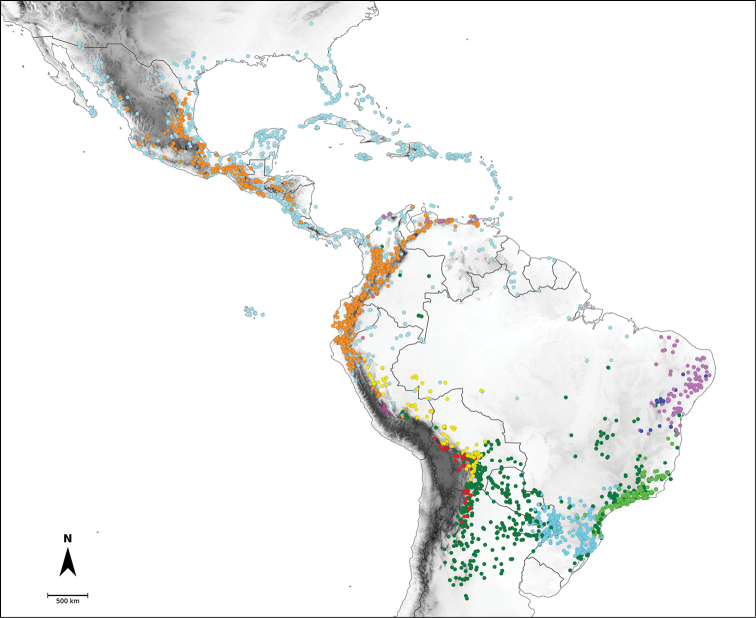
Five species, five separate domestications — a bell pepper and a habanero are not the same plant selected two ways; they are different species from different continents' worth of habitat. Roughly half of all wild species are single-country endemics: 14 in Brazil alone, six in Bolivia. Species richness peaks in the Andes with 22 species; Bolivia and Peru host 14 apiece.
Ten thousand years in one scroll
Peppers were among the very first plants domesticated in the Americas — alongside beans and squash, ahead of corn's rise to dominance. And the famous naming mistakes started early.
Meet the five domesticates
Every pepper in your garden is one of these. Photographs are from the monograph itself.
Which pepper is that?
The monograph includes a formal identification key to the domesticated species. Here it is as a field tool — three questions, answerable with a flower and a ripe pod in your hand. No seed packet required.
Translated from the monograph's "Key to the domesticated Capsicum species." Botanical shorthand: "calyx teeth" = calyx appendages >0.5 mm.
How the plant is built
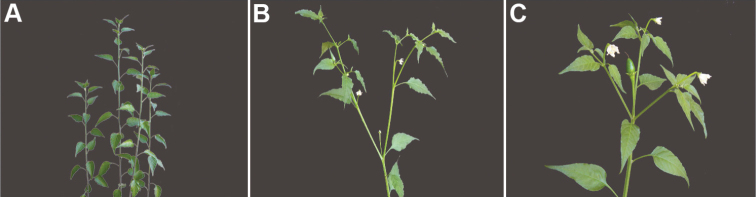
The fork is destiny. A young pepper grows a single stem — 8 to 39 leaves' worth, depending on cultivar — then the growing tip terminates in a flower and the stem splits. Every branch repeats the trick: grow a little, flower, fork. That zig-zag "sympodial" habit is why peppers form a natural candelabra, why a flower sits in every crotch, and why your plant forks whether you top it or not — the first fork was scheduled the day it germinated.
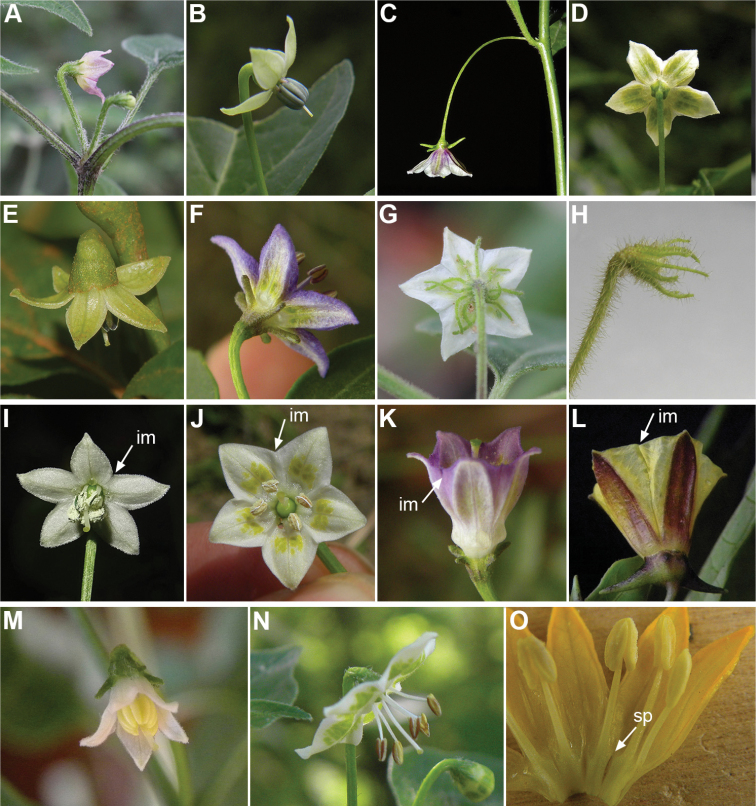
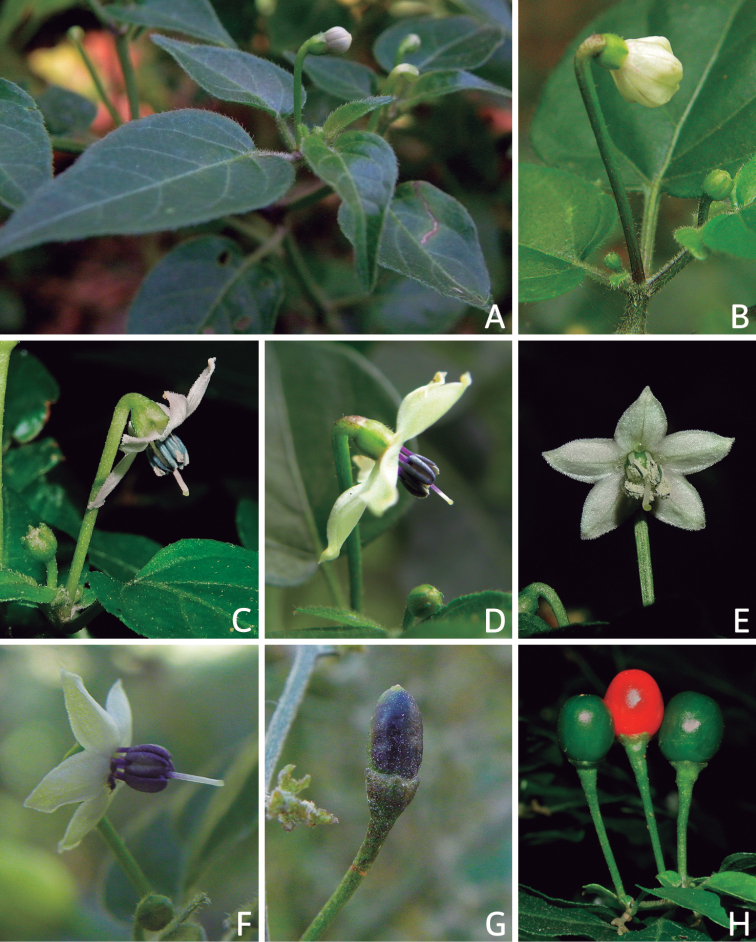
Flowers are the ID card. Five (rarely up to eight) petals fused into stars, bells, or wheels; anthers that can be yellow, blue, or purple; and a nectar trick unique to a few nightshades — nectar made at the ovary's base travels up tiny ducts and beads as droplets on the petals, an open bar for bees. Wild species run from the 4-mm flowers of the Galápagos pepper to 18-mm yellow bells in Bolivia; purple-and-gold rocoto flowers would be worth growing even if they never fruited.
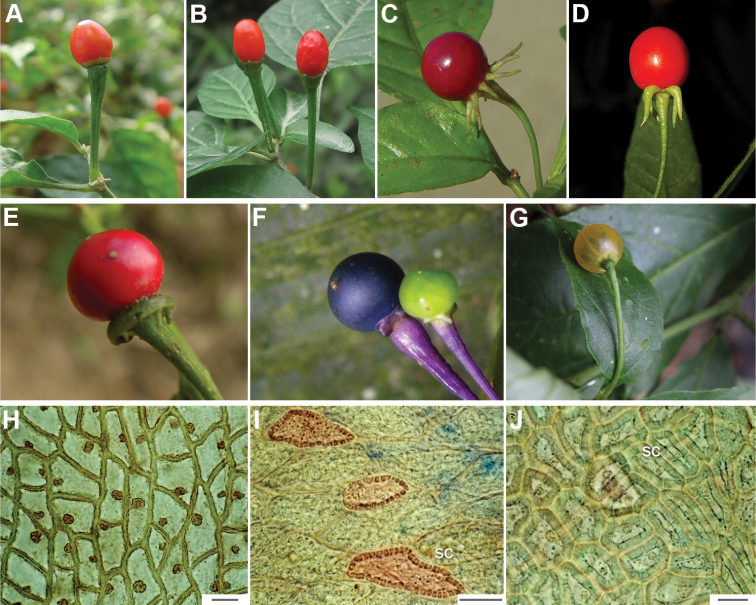
A pod is a berry. Botanically the fruit is a berry, usually two-chambered (domesticates go up to five — that's why bells have lobes). The wall's inner surface is blistered by a single layer of enormous "giant cells" — one of the anatomical signatures of the genus. Wild pods are nearly all small, red, upright, and deciduous: they pop off the calyx cleanly so a bird can swallow them whole. Your garden peppers hang on stubbornly instead — we selected them to stop feeding birds and start feeding us.
Where the heat lives
The monograph is unambiguous: capsaicinoids are synthesized and stored by secretory cells in the placenta and septum — in dedicated storage vacuoles called capsisomes — beginning about 10 days after flowering and reaching full gland development around day 30. Seeds and walls carry comparatively little. The "seeds are the hot part" rule your grandfather taught you is anatomy done by rumor.
Pollination & crossing
Peppers are self-compatible — a lone plant will set fruit — but they are not reliably self-pollinating in the "nothing ever crosses" sense growers repeat. The stigma is receptive before the flower's own anthers open, and bees are documented, effective pollinators. If you save seed from two varieties of the same species grown side by side, expect visits to have happened.
Between species it gets interesting: the annuum complex (annuum–chinense–frutescens) shares one primary gene pool, some pairs cross in one direction only, and the rocoto is a genetic island whose real crossing partners are wild Bolivian species.
One more monograph note your greenhouse thermometer will appreciate: pollen development and fertilization are temperature-sensitive, and high temperature is the documented enemy — that's the science behind summer blossom drop.
Birds planted the first peppers
Why is a chiltepin hot in the first place? Not for you. Capsaicin experimentally repels rodents — which chew seeds to death (0% germination after rodent gut passage) — while birds are neurologically blind to it. Field tests with wild C. annuum in Arizona and C. chacoense in Bolivia confirmed the "directed deterrence" hypothesis: heat is a bouncer that turns away seed-killing mammals and waves seed-carrying birds through. Bird gut passage even improves germination.
Look at a wild pepper with that in mind and the whole plant makes sense: small red pods a bird can swallow, held upright above the leaves like signal flags, popping off the calyx at a touch. Every one of those traits is what domestication then spent millennia undoing.
What this means in your garden
The monograph, translated to dirt
- Stop fighting the fork. Branching at the first flower is the plant's blueprint, not damage or a response to topping. Work with the candelabra.
- Your "annual" doesn't have to be. The monograph describes C. annuum as "annual herbs or short-lived subshrubs," and most of the genus as short-lived perennials. Overwintering a pepper isn't a hack; it's letting the plant be what it is.
- De-rib, don't de-seed. Placenta and septum hold the heat. Seeds are bystanders.
- Isolate by species, not by fear. Saving seed? Annuum–chinense–frutescens intermix readily; baccatum mostly won't cross into them; rocoto crosses with nearly nothing in your garden. One bag, one blossom, problem solved.
- Heat spikes cost you fruit set. The documented pollen-killer is high temperature. Shade cloth in a heat wave does more than any bloom booster.
- Match species to climate. Chinense wants Amazonian warmth; rocoto laughs at cool nights that would sulk a habanero (it grows to 3,500 m in the Andes). "Peppers love heat" is a five-species question with five answers.
- Chiltepins are understory plants. The wild annuum grows in shade along arroyos and forest edges. If your potted chiltepin resents full desert sun, it's being authentic.
- Expect crosses in saved seed. Bees work pepper flowers, and the stigma is open for business before the flower's own pollen is. "Peppers self-pollinate" is true-ish; "peppers don't cross" is not.
Sources & credits
How this page was made
This is a grower-focused distillation of a single primary source: the 2022 Capsicum monograph. Interactive charts redraw the monograph's own figures and keys (family tree from Fig. 1; ID tool from the key to domesticated species; map and timeline from the distribution and domestication chapters). All photographs are reproduced from the monograph under its CC BY 4.0 license; photo credits as captioned there (largely G.E. Barboza and colleagues). Claims about pollination, capsaicin localization, and seed dispersal cite the studies collected in the monograph's review chapters, listed below.
References
- Barboza GE, Carrizo García C, Bianchetti LB, Romero MV, Scaldaferro M (2022). Monograph of wild and cultivated chili peppers (Capsicum L., Solanaceae). PhytoKeys 200:1–423. PMC9881532 — the source for this entire page.
- Carrizo García C et al. (2016). Phylogenetic relationships of wild and domesticated Capsicum. Annals of Botany 118:35–51 — the phylogeny behind Interactive 01.
- Kraft KH et al. (2014). Multiple lines of evidence for the origin of domesticated chili pepper, C. annuum, in Mexico. PNAS 111:6165–6170.
- Perry L et al. (2007). Starch fossils and the domestication and dispersal of chili peppers. Science 315:986–988.
- Dillehay TD et al. (2017). Simple technologies and diverse food strategies of the Late Pleistocene and Early Holocene at Huaca Prieta, coastal Peru. Science Advances 3:e1602778.
- Tewksbury JJ & Nabhan GP (2001). Directed deterrence by capsaicin in chillies. Nature 412:403–404; Levey DJ et al. (2006), field tests in Arizona and Bolivia.
- Tong N & Bosland PW (2003) and the crossing literature reviewed in the monograph's floral biology chapter — behind Interactive 06.